Showing posts with label review. Show all posts

Tuesday, May 19, 2015

Movie Review: "Good Kill"

"Drones aren't going anywhere. In fact, they're going everywhere."

At the heart of Good Kill is the above line of dialogue, said by an Air Force commander to newly stationed personnel, in a depressingly matter of fact manner. It's a lament for sure, but more in the vein of a Wal Mart manager who slightly disagrees with superior decisions, but goes along anyways for the sake of their career. We see this commander drink liquor at his desk - an act which may be more widespread in military bases than most would think. How the hell else do you get through this job?

And, never forget, it is a job. This fact is presented as a mentality and loose justification for the events in the film. You go along withhorrific and morally grey acts because "it's your job". When that excuse doesn't work, you're told if you don't kill them, they'll kill you. Or 9/11. Or Murica. Or all of the above. Where's the scotch?

Andrew Niccol, director of greater movies that force us all to question things like Gattaca and Lord of War, attempts a return to form after such anomalies as In Time and The Host. I can't explain what happened during those years, but he seems to have lost an edge. Or rather, mistaken his previous edge for a current anger.

Ethan Hawke leads a small crew of Air Force pilots who, based on the outskirts of Las Vegas, control weaponized drones over the Middle East. In between investigations and semi controlled kills, they talk and bicker about the politics and morals of what they're doing. For them, a joystick that helps to unleash fire from the sky is their water cooler. And their talk? Well, it's awfully straight forward and rarely well thought out. Basically, it does approximate water cooler conversation.

When the team starts getting missions from an unnamed CIA official - the clone of Snidely Whiplash - via speakerphone, the office chat only ramps up, as does the kill count. They throw around sarcasm when given a war crime like task, as it seems to be the only defense they have.  When we see the result of their strikes, it's eerily quiet. We're hearing what the team is hearing. After months of doing this, it must start to feel like a dream than a game.

By the time we meet our "hero", he's already burnt out and depressed, beginning to drink himself into a coma and on the verge of a divorce. It's not really the authorized off the books murder that's getting to him, but the disassociation of it all. I think he can still feel, but would rather feel more. Deployment was better, he suggests. To be deployed is what he wants. Face to face judgment, I suppose.

In the end, Hawke commits two righteous acts that can be said to be both the fault of those above him and dangerously ambiguous as to the message of the movie. He essentially becomes a full blown product of this system of war - a drone of his own maybe - taking it upon himself to execute what (and who) he wants. Both actions might be seen as heroic, but are done in such clumsy and twisted ways that it's hard to decipher how the film feels and, ultimately, how we should feel. Misplaced ambiguity and cliche conclusions make for something very confusing.

Good Kill is an exercise in near meaningless ranting, rarely providing anything to chew on other than blunt force talking points. Everything it tries to express about drone policy and war in general is done so at high volume, but comes off with frequent static and repetition. Lots of repetition, actually. Droning, you could say.

2.5 / 5 *s

Good Kill opens May 22nd in New Orleans at the Zeitgeist.

Friday, June 13, 2014

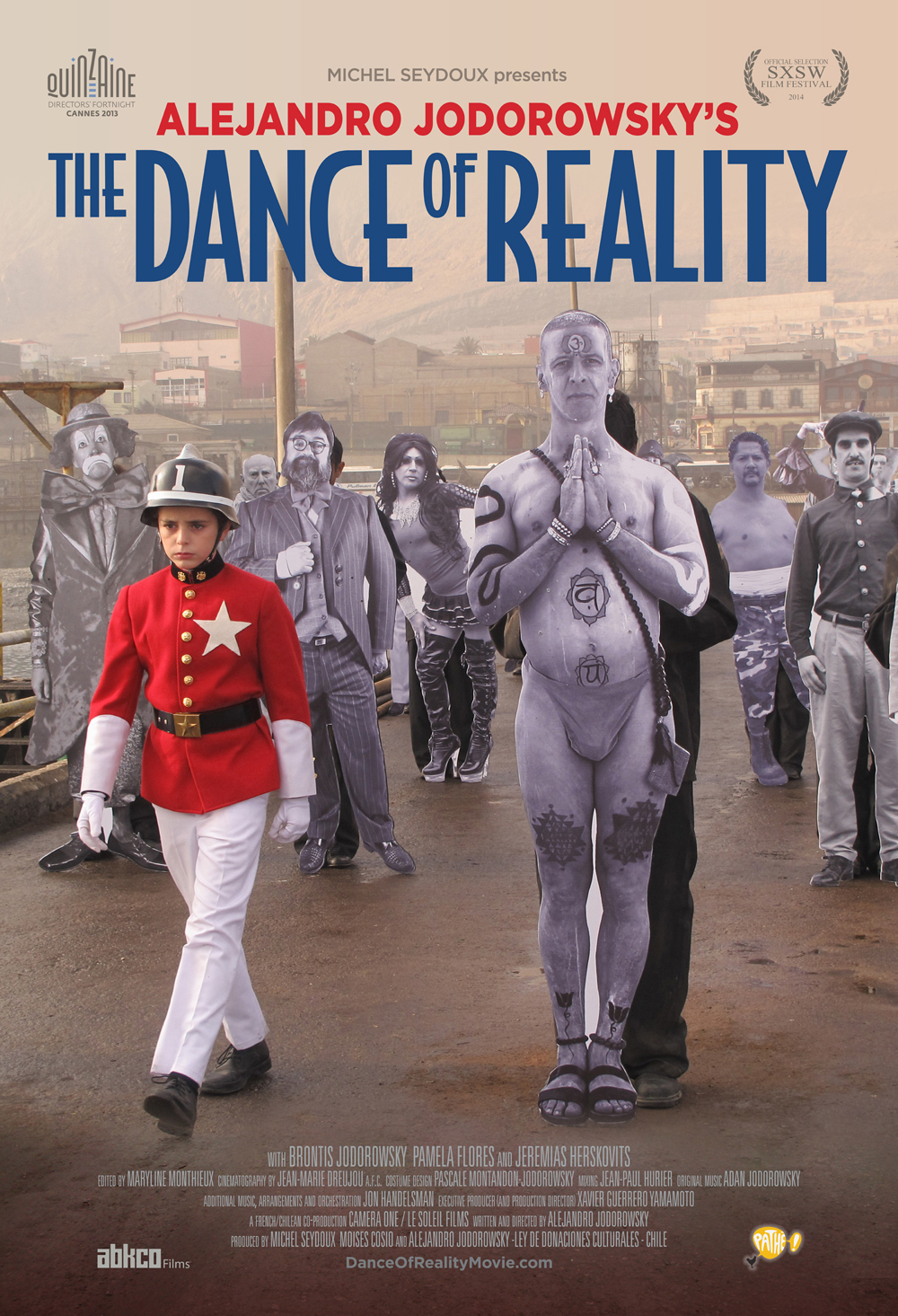
An Exercise in Exorcism: "The Dance of Reality" Review

Jodorowsky's Dune, a documentary of interviews about Alejandro Jodorowsky's planned adaptation of 'Dune', is about 90 minutes of talking that feels like 2 1/2 hours of wonderful flashbacking. Jodorowsky, even when subtitled in English, has such a command of words; every sentence spoken by him is evocative and filled with purpose. Mundane moments of casually meeting someone are made alive and important, with every detail necessary to the story. This is a man not worried about time, but still concerned enough to not waste it.

Why isn't he making more movies?

When the conversation of who was to direct Man of Steel was held, the first names to jump to my mind were Clint Eastwood and Alejandro Jodorowsky. Both men have vastly different styles and agendas when it comes to making film, but they do share a certain reflective quality, a thoughtfulness, that I was looking for in a Superman story (which I still liked, by the way). Actually, the hero would've been a mere vessel for the filmmakers, as they explore themselves the more they examine the star.

Seriously, why isn't Alejandro making more movies?

Tuesday, June 10, 2014

The Clones of Josef K: "The Double" Review

In the book 'Kafka Goes to the Movies', an author investigates journal entries and letters, written by Franz Kafka himself - the tortured soul behind 'Metamorphosis' and 'The Trial' - to piece together his thoughts and feelings regarding the new form of entertainment: cinema. Someone who wrote such nightmarish prose, filled with anxiety upon anxiety, would surely have a perspective more critical than that of the masses. Would he even be able to enjoy watching this parlor trick?

Actually, yes. Yes he was.

According to the book, he wrote about his time watching moving pictures - some as simple as a young woman looking pretty - with *shock* joy. And it's joy at something superficial, too. Amazing. If Kafka could time travel, would he be stuffing his face with popcorn, laughing at Michael Bay robot testicle jokes?

It's scary to think of, but might be easily explained with, ironically, Kafkaesque logic. At least, I hope it can.

Monday, June 9, 2014

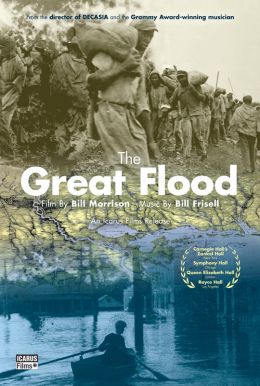
Decayed Contrast: "The Great Flood" Review

As I sat in a theater filled with mostly middle aged festival goers, halfway through The Great Flood, I came to some conclusions:
  • Bill Morrison is THE filmmaker who could possibly settle the digital vs. film debate.
  • People make their own stories, with or without a camera being present.
  • Intent isn't always relevant.
It's amazing the kind of work and study that went into this movie - hours upon hours of footage, carefully chosen sequences edited in specific order, music scored along with it all, etc. When I add the three bullet points above, the images presented take on startling depth. Who is responsible for this depth? The original cameramen? The modern editor? The people and objects depicted? The effects of time on the film stock itself?

All of the above.

Saturday, June 7, 2014

St(alk)ing and Occupying: "Buzzard" Review

"What do you do at Wal Mart?"

"I'm a night stalker."

At this point in the film Buzzard, our "hero" Marty has been living off of his skills as a scam artist for a few
days, on the run from trouble with a previous con. He's been caught by the manager of a check cashing place, and is being held in the back office until the cops arrive. During some chit chat, he comes up with several stories, one of them about a job at Wal Mart. In passing, it's not all that important, as he just wants out of the building. But, when asked the specifics of his job, he pronounces stocker as "stalker".

This takes the manager back a bit, who responds with a what and a smirk. To us, it was only a matter of time.

Sunday, April 13, 2014

Review PLUS: "Captain America: The Winter Soldier"

Up to the point of Thor: The Dark World, the current incarnation of the Marvel Cinematic Universe (MCU) has been, almost entirely, pop entertainment. Awesome pop entertainment, yes, with some wonderful character arcs and relationships, but anything that transcends beyond? Not much. 

The one aspect of the series that has been challenging with regards to modern society and politics has been S.H.I.E.L.D. - the organization that out NSA's the NSA. The organization's director, Nick Fury, is so shadowy and ethically questionable, he rides the fascism line HARD. Dealing with such a group must be a trial even for someone as strong as The Hulk.

The star spangled hero Captain America, a man left over from the WW2 generation, is especially uneasy with this group, and even more so with a world that accepts it as necessary. THIS is what he fought for?

In Captain America: The Winter Soldier, Cap has reluctantly joined with Fury's team with the goal of serving his country (when life throws a lemon...). He has concerns, but swallows them for the greater good - this struggle is read not just on his face, but in the way he walks when not on the job. The dejected disappointment and tragic trudge of someone who is basically superhuman makes for quite a performance, and Chris Evans gives it his all.

Soon, a conspiracy within the ranks confirms and exceeds Cap's suspicions. Instead of spoiling what happens, here's a quote from William Burroughs:
You see control can never be a means to any practical end. ... Control can never be a means to anything but more control ... like junk.
The transcendence of this movie comes from the deeper questions posed by the villains. It's a statement on where we've been, where we are now and where we could end up. Government surveillance, preemptive strikes, borderless wars, and even hacktivism are covered. In The Dark Knight, Batman was presented as being forced to use super surveillance tech to capture a mad man. If seen as commentary, you could take it as the U.S. "not wanting" to do this, but having "no choice", which is B.S. In The Winter Soldier, Captain does an epic amount of dismantling, which some real life politicians might call treasonous. Talk about REALLY having "no choice".

Part of accomplishing this progressive move was the choice of filmmakers. The Russo Brothers were previously known for directing TV shows and You, Me and Dupree. To perfectly tackle the feat of a comic book movie with an espionage thriller edge and non intrusive direction was a happy surprise to see from this duo. There's a confident command going on here, without the need to show boat - very much in common with Captain America himself. Simple execution but not generically textbook. And the one element executed expertly? Suspense.

Tension is thick here. The dilemma and crisis Captain confronts might be the strongest a superhero has faced since The Dark Knight. In that movie, it was Batman's personal code and soul at stake. In The Winter Soldier, it's what the Captain represents - the high standard that he has put on himself, for his country and fellow man. Both conflicts were traumatic turning points for these characters, and the conclusions are more bittersweet than anything. The difference between the two? Captain has no time for brooding and self doubt - there's a mission to accomplish.

Marvel's Phase 1 was pop, and Phase 2 has been a time of change - not just for The Avengers but the creative talents picked to helm these projects. Many chances are being taken, and rightfully so. This is a sequel that, I hope, will be copied and piggy backed for years to come. Hail MCU.

5 / 5 *s

PLUS - When Simple Beat Style: "Captain America: The Winter Soldier" vs. "Man of Steel"

An article on ScreenCrush came to my attention recently. In it, the author made the argument that it was only after watching Captain America: The Winter Soldier that his opinion on the handling of Superman in Man of Steel went sour. It came down to Captain *spoiler* choosing not to finish off Bucky vs. Superman snapping Zod's neck. One was an affirmation of a character's code, and the other an out of place moment.

While I still contend that Man of Steel was a good take on Superman (though I might knock a star off in hindsight), the article's comparison made me think about what else The Winter Soldier may have done better - this time, with the language of cinema. I submit to you the following examples:

Superman = Jesus

There are two "infamous" shots in Man of Steel that floored many a critic, and made many an audience member laugh. The first was in a church, where Clark Kent seeks advice from a young priest. It's a well written scene, and makes sense for the character to reach out in this manner, considering the problem he faces. However, our hero is framed in front of a glass portrait of Jesus Christ. THIS IS TOO OBVIOUS. It's almost film school level framing, actually. Now, looking more closely at it, it seems that Jesus is on his knees in that portrait, meaning to express Clark's doubt in a deeper way. That spec of detail almost forgives the childish attempt at depth, until...


... Superman floats away from the Kryptonian ship, arms extended from his sides, with music playing that makes you think about church. This character has always been compared to Jesus and other religious figures, and there's nothing wrong with that. What IS wrong is BLUNT FORCE TRAUMA. There are other ways to get across this similarity than the superficial.

Captain America and his feelings

In the review above, I touched on the performance of Chris Evans, and how, early on, he carried on his shoulders the weight on Captain America's emotions, all without moping. There was some great body language, sure, but there was more at play here to establish tone, atmosphere and feeling - all to connect us with our hero.

For starters, the sequel feels far different from the first movie. The First Avenger was stylistically designed to have classic cinematography and color schemes. No matter what we all thought of the overall film, the mood was set to give us an old school FEEL. In The Winter Soldier, we have some very modern camera movements and colors to match what's happening in the portion of the story we're watching. Ironically, this too is film school like, but appropriately so. It's textbook in technique, but creative in execution.

There is a feeling of cold detachment to the first act, which makes sense because of Captain's thoughts on the world at the time. He feels alone, so the environment should reflect that to make us experience that. His apartment looks sterile, clean and clear, so we FEEL that way too. His trip to a museum exhibit on his past exploits is shot in a sweeping and slow manner, giving us time to absorb the images, think on them and FEEL what they mean. And, by feeling, we understand without having to be beaten over the head.

What does the tone and atmosphere say about a film? How about of the filmmakers? In Man of Steel's case, it tells me that it's a bit impatient to get information across, slightly clumsy and that Zack Snyder gets lost when trying too hard (despite being a tad restrained). In Captain America: The Winter Soldier's case, it tells me that underestimating the audience's intelligence is wrong, cinema is a universal language that ALL can UNDERSTAND, and The Russo Brothers know how to engage without being obnoxious.

So, in this way, yes, Captain America beat Superman. And he didn't have to snap a neck to do so ;)

If you liked this review, feel free to leave a comment below and visit patreon.com/neauxreelidea to learn how you can support my film criticism efforts.

Monday, February 10, 2014

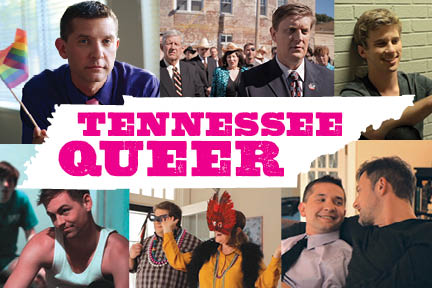
Review: "Tennessee Queer"

The more things change, the more they stay the same. I’ve heard and used this phrase more times than I care to count, but, much like its meaning, it never gets tired despite the more it’s used. And yet, the lessons that can be learned from it often go in one ear and out the other. Repeating a phrase over and over to people who are constantly repeating the same actions over generations makes me ask; Is an uphill battle worth fighting?


With a sense of humanity and an optimistic radiance, Tennessee Queer says yes.

The strong willed aspect is best expressed through the character of Jason Potts. He’s from a town in Tennessee called Smyth, where high schoolers have a decades old ritual called “Smear the Queer”. It’s a place he has since moved on from, living now in New York with his loving boyfriend. Oh, Jason is gay, by the way. This fact is never presented in an over the top fashion or outrageously stereotypical manner - it’s all very casual and, dare I offend someone, normal. Is sexual preference blindness a thing?

During a visit home, he’s confronted with a family intervention, moderated by a church pastor. I was kinda programmed to expect prejudice to appear here, but that gets subverted quickly; the family just wants Jason to move back to town. They support and love him? Yes. Twice my expectations of cliches were squashed in favor of something much richer. The family tries to impress upon Jason how the town has changed, but they do so with some caution, which he catches on to. Before heading back to New York, Jason proposes to the city council a gay pride parade, mostly in jest and  to mess with their heads. To his surprise, the parade is a go, and he’s now in charge. What felt like a backfired burden at first becomes a chance to provide the youth of his hometown an example of courage, and to show the people of Smyth that they’ve been worried over nothing.

On the flipside, we have the main antagonist, an opportunistic conservative councilman who once bullied Jason (and who I wrongly suspected had unrequited feelings for him). He is, more or less, a bumbling foil for our fingers to point at. An amalgamation of all the regressive and despicably unintelligent politicians that constantly get voted into office. Is he a victim of his environment, merely trying to, in his mind, protect the soul of his town? Is he a person we can feel for? It certainly doesn’t seem so.

This councilman only exists to have awkward moments at gay bars and be made fun of. It’s part deserved and part disappointing. We need to take the piss out of this kind of behavior, sure, but can’t we do so in a less cartoonish way? On second thought, CAN we do so in a less cartoonish way? Is there a false equivalency I’m trying to draw? No matter - while he represents the dying breed of old thought, the parade protesters in this movie represent the heart underneath the hate; the possibility of open minds, shown in a beautiful climax.

Movies like Tennessee Queer are hard to come by. It’s a story that is confident in its stance, knows what’s right and understands that baby steps can be giant leaps forward. Sure, change is slow, but it happens all the same. More and more.


4 / 5 *s


Tennessee Queer will be screening at The Prytania on February 10th at 7:30PM. Visit tennesseequeer.popslice.com/screenings for information on future events.

If you enjoyed this and other reviews, feel free to visit patreon.com/neauxreelidea.

Sunday, April 28, 2013

@Twitter #Thoughts: "Dredd"

I wasn't able to include Dredd in my Best of 2012 list, but, if it means anything now, I should have seen it much sooner. Here are my live tweets of my first viewing of this awesome flick:

Friday, April 5, 2013

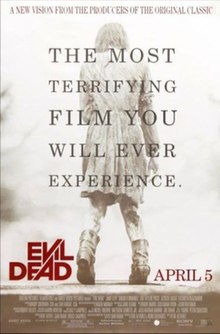
Review: "Evil Dead"

It doesn’t take much to impress me, but it does take a lot to scare me - when it comes to movies, I mean. At my most recent outing, a colleague teased me a bit about my lack of interest in watching horror flicks. Then, just prior to the movie starting, a security woman yells at us all, “If we catch you with an electronic device, you WILL be escorted out by the police!” For me, real instances like this are much scarier than anything that flickers on a screen.

After being bombarded for years by trailers and DVD’s for movies that offer nothing but jump scares and familiar killers, I’m kinda lukewarm towards this genre. Reviewers like The Cine-Masochist make me feel a bit picky and unfair, but it’s just how I feel.

That being said, I should re-state that it doesn’t take much to impress me. All I need is something fairly clever, easy to follow and very fun to watch; if the cast and crew are having a blast, so am I (Troma is great at this).

And watching a demon vomit vibrant, non CGI blood on a woman, only to be chainsawed in half later on, is indeed “a blast” and “fun to watch”.


The new Evil Dead (based on the original Sam Raimi classic - a kind of remake/reinterpretation) begins with the quickest of expository sequences I’ve seen in a long time: Five friends go to a cabin from their youth to help one of them kick drugs, brother and sister have problems, friend and friend have problems and all sorts of groovy weapons are established. Got it? Good. This movie knows what the audience came to see, and is just as antsy to get there as we are.

The book of the dead is found, read aloud, and the drug addicted friend becomes possessed by a demon, setting off a chain of events that could lead to hell on Earth beyond the woods. In one scene, the two men in the group discuss how to end this nightmare. One of them suggests they kill the drug addicted one, as the book suggests to do. When asked if it’ll work, we get one of the best lines EVER, “I don’t know; this isn’t a science book!”

I haven’t watched the first two original Sam Raimi films, so I will just compare this to a movie that gave me equal feelings, Marvel’s The Avengers. Both had high expectations amongst fans, relatively unproven directors (Joss Whedon had only done TV and smaller scale flicks) and the perfect storm of elements to turn them into train wrecks.

Almost a miracle before my eyes, this movie rocked.  

Like with last summer’s superhero blockbuster, Evil Dead gets it all right. It’s a simple story, with enough character depth and conflict to break the first dimension. Smart cinematography and placement of objects in a shot gave weight to what could’ve been flat. The editing was smooth and aware of genre expectations, playing with the typical jump scare beats we’ve all gotten used to. And the effects - 99% practical - made the happenings much more vibrant and very unforgettable. I bet the producers had a tight grip on this one...

I also got the impression that the movie wasn’t just another part of a familiar franchise, but a statement on how modern horror can and should learn from past horror. There is an opening shot that might as well have been taken directly from The Shining - an upside down then right side up shot of a car driving down a long and remote road. Then, of course, there was all the blood. Remember that bleeding elevator sequence? How about a movie featuring fountains of crimson rain? There are not only great effects workers out there, but also genuine fans of thrills and chills, dying to make a movie like the ones they grew up on. Maybe Evil Dead will start a trend.

There was a little kid who, after the screening, stared at the poster for the movie with a huge smile on his face. “The Most Terrifying Film You Will Ever Experience.” it said. I wanted to take a photo with him in front of that, as we were both feeling the same thing; cinematic bliss. Though, the fact that his parents let him go see this shocked me more than the movie itself... Yep, I’m still not scared. But, I am impressed. Very.

5/5 *s

Wednesday, October 10, 2012

@NOFS Review: "True Family"

Cross posted from the MoviePass blog:

When you think of New Orleans, what comes to mind? Food for some. Hurricanes for others. Movies for me. And, of course, no thought about the city should be without the most obvious answer - music. You don't even have to leave your stoop to hear a juicy tune playing. Without that element, this city wouldn't be as alive as it is.

And which performer best represents this?

Meschiya Lake is a sort of revivalist style jazz singer, belting out wonderful notes on street corners for tourists and city dwellers alike. She has a background in circus acts, a plethora of tattoos and looks/sounds dynamite. She bikes around town, joyfully training her voice for the next song. She is strong, fun and very talented. Alive is the perfect word to describe her.

Before watching "True Family", I had never heard of Meschiya (I ought to be shot). I knew of bands like Tuba Skinny (who were nice enough to let me use their music for my #TeamNOLAFilm podcast), but that was about it. Knowing what I know now, I'm hit with a wave of sadness that there was a whole musical community in the area that I was unaware of - This was followed by absolute happiness when I discovered her album on Spotify. But what really impresses me here is how, through this singer, we are given a novel glimpse of a thriving young creative crew.

You see, this is really more a profile on an artistic circle - one that works with one another. Musicians help each other out, floating from band to band, getting the word out and improving the culture. Others like dancers and designers get in on the act, contributing their talents not so much for the money (the little that is available), but for the joy of expression. This look at the New Orleans music culture makes my heart flutter. 

Recently, there was a tiny spat that spilled onto social networks between two local film organizations, with one accusing the other of monopolizing venues. Ironically, both groups encourage teamwork from everyone involved in the movie community, from directors to critics. Can we call the NOLA film community a true family? Well, sometimes families do argue...

3/5 *'s

"True Family" will be showing at this years New Orleans Film Festival on October 15th. Buy your tickets here.

Sunday, July 29, 2012

Thursday, July 26, 2012

Solo Thoughts Episode 2

Adrien Brody, bruised and bleeding, pees on himself? I HAVE to stop the movie to talk about it...


A full written review to follow.

Saturday, June 9, 2012

Review: "Hot Cakes"


Cross posted from InvadeNola, where this will be appearing on June 16:

On the first episode of the #TeamNOLAFilmpodcast, we discussed the need for a real investment in local filmmakers and their projects. We have so many out of town productions coming IN to the area which is great, but not enough local projects coming OUT. Do producers need a good example of what New Orleans talent can make?

"I have been waiting all morning for a man with half a heart."

Marty, fresh out of prison, visits his regular post jail release diner.  His body language says he's yearning for a calmer future, but the scars on his face suggest something different; something deeper. Two other ex cons see this as well, and soon the three men are conversing over plates of pancakes. But there is more to their encounter than just short stacks...

Described as a sort of neo noir / urban western, "Hot Cakes" has a surreal nature to it; at times like Lynch, other times like Aronofsky. The appropriately timed music, the cryptic at times dialogue, the interesting framing (there is a Knight suit behind Marty in some shots) and even the setting - which comes off like a purgatory type meeting place for these characters - all makes the audience ask "what's this all leading to?" and "what does this all mean?".

Well, what DOES it all mean? What IS it leading to? A fortune teller in the diner is drawn to Marty, and makes a startling prediction for him; will it turn out to be correct? Will Marty be forced into a compromising position? His new friends certainly wish to pull him back into his harsh past. Will they succeed? The film's aesthetic gives everything - including eating breakfast - a sense of impending doom. And by the time the end credits roll, this sense still lingers; things just don't look good for Marty, in OR out of the diner. Is he in trouble no matter what? I absolutely loved this.

"No one should ever come here. I had teeth when I came here."

My only complaint is that it ended. I would like to see what the director Jo Custer could do with a feature length script. She's an example of the kind of local talent who deserve a shot. For Hollywood South to move forward, out of town producers bringing projects to the area need to make a meaningful investment in local filmmakers. Is an example of good local work needed? I just provided one.

4/5 *'s

Monday, March 19, 2012

@NOFS Review: "A Por Por Funeral for Ashirifie"


My grandfather’s name was Willie Laurendine, but we called him Paw Paw. He was a bus driver for the city of New Orleans. In Ghana, there is a style of music played by a union of bus and truck drivers known as Por Por, which is pronounced Paw Paw. This music is only performed by them at the funerals of fellow workers – funerals that share similarities with the jazz funerals of New Orleans.

Despite this almost Six Degrees of Kevin Bacon style connection I had with “A Por Por Funeral for Ashirifie”, there was little else for me to latch on to.

It’s not the fault of the subject matter – a variation of a jazz funeral, performed with antique car horns and played exclusively by an African driver’s union – which I was excited to learn more about; it was the presentation. There is no attempt to tell the audience about the history of this music, its importance in the area, or even who Nelson Ashirifie Mensah (this was his funeral) was as a person. We are only treated to what has to be at least 45 minutes of nonstop horn honking and street dancing (the movie is just under an hour) and a few title cards that describe the upcoming action. That’s it. Were they just dead set on making this almost feature length?

I know it’s easy to just point your one camera and shoot, but if you’re making a documentary about a little known subject, you HAVE to give the audience some information outside of a few words on a screen; interviews, historical archive materials, narration and editing are all helpful tools. Most audiences aren’t interested in the raw footage of a trip you once took.

The Por Por music reminded me of the wonderful intrusiveness of the whistle tip craze (google it); both are loud and proud. When a member of this union dies, the whole town knows, and – at least for the rest of the day – the noise will not let anyone forget. That I like.

The filmmakers are coming to New Orleans on March 23 to screen the film, and will be accompanied by a live demonstration and panel discussion. This is an excellent opportunity to learn more about this unique culture. I guarantee it’ll be more informative than the movie itself.

1/5 *'s

Tuesday, August 23, 2011

Why Did Roger Ebert Spoil "Super"?

SPOILER ALERT: I reveal a spoiler originally spoiled elsewhere.

For film buffs, the decision to read a spoiler can be a difficult temptation to overcome. With high ticket prices for movies, and even higher anticipation for popular movies, spoilers can provide certain audience members with the insight they need to decide whether or not they'll be catching a flick. But for most moviegoers, having a film's ending revealed unsolicited can ruin their theatre experience. Knowing this, reviewers do their best to avoid making any startling revelations.
Roger Ebert Blvd.Image by rexb via Flickr

In his review of "Super", Roger Ebert let slip the fate of the character played by Ellen Page. In the first two paragraphs. Filmmaker James Gunn immediately took to twitter, and started hashtag jokes at Ebert's expense. While a spoiler notice has since been attached to the review, I wonder - why did Ebert write the spoiler in the first place?

Personally, I disagree with his take on the movie. At the end of the review, He writes "'Super is a film ending in narrative anarchy, exercising a destructive impulse to no greater purpose than to mess with us." To me, this is a positive and is what makes the film great - it being emotionally intense and challenging (a nice way of saying that it "fucks" with you). Ebert is no stranger to emotionally challenging films, but maybe this one scene went too far in his mind. 

Ellen Page at the Whip It roller derby present...Image via Wikipedia
Ellen Page, as an actress, is easy to fall in love with. I can't say that I've disliked any of her performances, whether they're in low budgets like "Hard Candy" or big budgets like "Inception". And, judging from his reviews, I'd say that Ebert feels the same way. I think that when He witnessed what happened to Libby (Ellen Page) in "Super", He felt offended - how could they do such a thing to such an actress? He practically expresses this with SPOILER "when Ellen Page of 'Juno' stars in a movie, we don't much expect to see her brains dripping." END SPOILER This reminds me of the dust up He had with "Kick Ass" (another "real world" super hero flick) - how could they put that little girl in such extreme action scenes?

I don't want to suggest that He always disregards an entire movie because of one scene, but I have seen this happen before. I once showed "Storytelling" to two young women, and I'm convinced that if they hadn't witnessed a large black man having forceful sex with a little white woman, they would've liked the film more. I wonder if Ebert's thoughts on "Super" might change a little if that scene were excised or re-written. Seriously, that one scene could make all the difference (kind of a compliment to the film, that one scene could make such an impression).  

Of course, Ebert's revelation didn't completely ruin the movie, nor did it ruin my opinion of him. Personally, I usually agree with him maybe 80% of the time (though I'm not sure how to accurately determine that). In this one case of disagreement, I find something to agree with - Ellen Page is wonderful, and seeing her in such a sequence is a shock.

Should critic's be so chivalrous in their reviews? Spoiling a movie in an effort to warn others? I dunno. That's a topic for a blogger more articulate and better disciplined that myself. Certainly, some audiences don't mind knowing a little extra about what they're gonna spend their money on. Just be sure to attach a notice BEFORE posting the review. Might save yourself from a nasty hashtag or two. 


Enhanced by Zemanta