 From November 12th - 16th, New Orleans will play host to the comedy event Hell Yes Fest, spread out across multiple venues. Like last year, a film fest will occur, showcasing several comedy flicks from several talented filmmakers. I chatted with film fest programmer Michael Domangue (MD) AND special guest presenter / pro wrestler / comedian Colt Cabana (CC) over email about the ins and outs of HYFF and what we can all expect!:

Showing posts with label film festival. Show all posts
Showing posts with label film festival. Show all posts
Monday, November 10, 2014
#HYFF2014 Q&A: Michael Domangue and Colt Cabana
From November 12th - 16th, New Orleans will play host to the comedy event Hell Yes Fest, spread out across multiple venues. Like last year, a film fest will occur, showcasing several comedy flicks from several talented filmmakers. I chatted with film fest programmer Michael Domangue (MD) AND special guest presenter / pro wrestler / comedian Colt Cabana (CC) over email about the ins and outs of HYFF and what we can all expect!:
Wednesday, October 29, 2014
#NOFF2014 Q&A: Sean Hanley

Monday, June 9, 2014
Decayed Contrast: "The Great Flood" Review
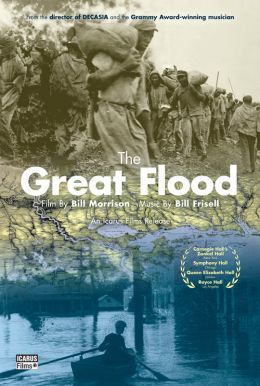 As I sat in a theater filled with mostly middle aged festival goers, halfway through The Great Flood, I came to some conclusions:
- Bill Morrison is THE filmmaker who could possibly settle the digital vs. film debate.
- People make their own stories, with or without a camera being present.
- Intent isn't always relevant.
All of the above.
Sunday, January 19, 2014
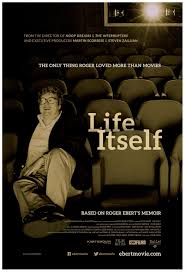
Review: "Life Itself"
In his review of the 3D re-release of Titanic, film critic Roger Ebert wrote:
 This is a line that I not only agree with wholeheartedly, but something I have taken as advice when criticizing
a movie. In college, a good friend of mine would often ask me to define what art is, and if it can be confined to just a few mediums. The answer lies in the mind of the beholder - anything can be considered art, from brick laying to murder (my college friend suggested that last one). To expand further, an art form should not and cannot be confined to a strict standard. Sure, there are basics in storytelling and expression through film, but they can be creatively manipulated and re-imagined in all sorts of ways. Basically, movies are not to be examined as one would a diamond. A movie can be more than one thing.
Roger Ebert spent his career as a film critic observing and picking apart cinema, explaining why and how, from his point of view, what kind of thing or things a particular movie was. His body of work was elegant, evocative and accessible, enlightening many a reader. This I knew. What I didn't know was that Roger was initially assigned to be a film critic. Fate?
In Life Itself, the documentary on Ebert's life and times (which premiered at Sundance just prior to the writing of this review), we learn that the most well known film critic in America is, like the movies he loves and hates, more than just one thing. It's silly thinking such a thing; that it's a surprise to discover a famous person was about more than what we knew them for. That they are people after all. Why keep that wall up between reality and fiction? In between a few hospital stays near the end of his life, the movie unfolds almost from Roger's mind, as if during rehab and doctor visits, he is going over memories painstakingly, to try and make sense of it all. Much like in a film about a biographer visiting their elderly subject. Almost beat for beat, it follows this pattern. To not only have a biopic made ABOUT you, but to also STAR as you, I can only imagine ONE question you might ask yourself; was it a life WORTH TELLING?
We get the fullest scope of the man as possible. From being a barfly to being a grandfather, from losing the ability to speak to strengthening the ability to communicate. Two moments showcased gave, for me, the clearest picture of all.
In the first one, we are witness to an extended reel of footage. It's of Roger and Gene Siskel, recording promos for their groundbreaking television show. In it, they spew more passive aggressiveness and verbally claw into one another more than I thought was possible. Throughout their partnership, Gene would often push Roger's buttons. There indeed was truth to their on screen dual persona of opposites. On TV, they'd argue back and forth on a movie's merits, and would continue debating once the cameras stopped. To order lunch, a coin toss would have to be conducted.
In the second moment, it's another extended reel of footage of the two men recording TV promos. This time, they are joyfully playing with one another, throwing good natured barbs back and forth, and sharing many a smile. At the end, something unexpected happened - it's revealed to be part of the same antagonistic promo shoot. In what was probably considered just mundane b roll to the television crew, Roger's personality and humanity are exposed. I get the strong sense of learning and growth from his relationship with Gene, one that I and many others can relate to. Like Roger, I've treated people both unfairly and friendly, and wished to have done things better. 20/20 perspective never comes during, but after. Damn.
I just read that Chaz Ebert, Roger's wife, spoke after the Sundance premiere. She said that he would often say a good movie leaves an audience member as a much truer person. I agree absolutely with that. The advice on using the word "flaw" when reviewing a movie still stands, and really can be applied to, well, life itself. Hopefully, I'll learn exactly how to apply that one day. It's true.
5/5 *s
If you enjoyed this review, as well as my others on this blog and across the internet, please visit patreon.com/criticalno and consider supporting my work.
"James Cameron's film is not perfect. It has some flaws, but I hate the way film critics employ that word "flaw," as if they are jewelers with loupes screwed into their eye sockets, performing a valuation."
a movie. In college, a good friend of mine would often ask me to define what art is, and if it can be confined to just a few mediums. The answer lies in the mind of the beholder - anything can be considered art, from brick laying to murder (my college friend suggested that last one). To expand further, an art form should not and cannot be confined to a strict standard. Sure, there are basics in storytelling and expression through film, but they can be creatively manipulated and re-imagined in all sorts of ways. Basically, movies are not to be examined as one would a diamond. A movie can be more than one thing.
Roger Ebert spent his career as a film critic observing and picking apart cinema, explaining why and how, from his point of view, what kind of thing or things a particular movie was. His body of work was elegant, evocative and accessible, enlightening many a reader. This I knew. What I didn't know was that Roger was initially assigned to be a film critic. Fate?
In Life Itself, the documentary on Ebert's life and times (which premiered at Sundance just prior to the writing of this review), we learn that the most well known film critic in America is, like the movies he loves and hates, more than just one thing. It's silly thinking such a thing; that it's a surprise to discover a famous person was about more than what we knew them for. That they are people after all. Why keep that wall up between reality and fiction? In between a few hospital stays near the end of his life, the movie unfolds almost from Roger's mind, as if during rehab and doctor visits, he is going over memories painstakingly, to try and make sense of it all. Much like in a film about a biographer visiting their elderly subject. Almost beat for beat, it follows this pattern. To not only have a biopic made ABOUT you, but to also STAR as you, I can only imagine ONE question you might ask yourself; was it a life WORTH TELLING?
We get the fullest scope of the man as possible. From being a barfly to being a grandfather, from losing the ability to speak to strengthening the ability to communicate. Two moments showcased gave, for me, the clearest picture of all.
In the first one, we are witness to an extended reel of footage. It's of Roger and Gene Siskel, recording promos for their groundbreaking television show. In it, they spew more passive aggressiveness and verbally claw into one another more than I thought was possible. Throughout their partnership, Gene would often push Roger's buttons. There indeed was truth to their on screen dual persona of opposites. On TV, they'd argue back and forth on a movie's merits, and would continue debating once the cameras stopped. To order lunch, a coin toss would have to be conducted.
In the second moment, it's another extended reel of footage of the two men recording TV promos. This time, they are joyfully playing with one another, throwing good natured barbs back and forth, and sharing many a smile. At the end, something unexpected happened - it's revealed to be part of the same antagonistic promo shoot. In what was probably considered just mundane b roll to the television crew, Roger's personality and humanity are exposed. I get the strong sense of learning and growth from his relationship with Gene, one that I and many others can relate to. Like Roger, I've treated people both unfairly and friendly, and wished to have done things better. 20/20 perspective never comes during, but after. Damn.
I just read that Chaz Ebert, Roger's wife, spoke after the Sundance premiere. She said that he would often say a good movie leaves an audience member as a much truer person. I agree absolutely with that. The advice on using the word "flaw" when reviewing a movie still stands, and really can be applied to, well, life itself. Hopefully, I'll learn exactly how to apply that one day. It's true.
5/5 *s
If you enjoyed this review, as well as my others on this blog and across the internet, please visit patreon.com/criticalno and consider supporting my work.
Wednesday, November 16, 2011
"...and it SUCKED!"
 |
| Image via Wikipedia |
Now, the original idea for our short was a bit more our liking; a guy makes a sandwich, walks upstairs, opens a bedroom door to reveal a female's foot tied to the bed. The End. No explanation, no resolution. Not being able to cast a foot model in time, we went with a more lighthearted idea; me, setting up a movie screening at a college campus, alone. Not bad, as I had done this very task several times before. And so, without permission to shoot on SLU campus property, we went ahead with production on "Screen This!". It only took a few hours to shoot. Next door to a heavily occupied student government meeting, we risked getting kicked out, but it's not like we were doing anything REALLY wrong.

After a short assemblage of local shorts, we were treated to an obnoxiously long parade of DJ music, rap, and the stylings of MC Chris Lane. Not to say that the musicians were horrible - far from it. But excuse me for expecting FILMS at a FILM FESTIVAL (to be fair, the musical performances were announced in advance, but who knew they would last so long?). The three of us sat on our bench, uncomfortably, for several hours, waiting...
Finally, it was time for the screening we were waiting for. The super 8 shorts were shown on what I'm guessing was a DVD, and for the most part, were pretty clever. But one short in particular caught our attention; announced as Lori Tipton's. It was black. 3 minutes of black. A rough image here and there, but nothing distinguishable. Pure blackness. Part of what made the contest interesting was that if the filmmakers messed up, there was no going back; it would be shown, no matter what. Clearly, something didn't go right for this person. "Sorry, but that last film was not by Lori Tipton, but by Bill Arceneaux and Patrick Simmons. And IT SUCKED! IT SUCKED!"
We were shocked. Was that really our film? Sure we only spent a few hours making it, but it was ours. Nah. Maybe they made a mistake. We stayed until the last short of the screening to make sure - but it was, indeed, our film. Our mistake. We tried to figure out what happened; Did we load it in wrong? Did we remove the film incorrectly? Was it improperly developed? One of the festival promoters was just as surprised as we were. We left One Eyed Jacks not as entertained film enthusiasts or as trophy holders, but as self disappointed amateurs. I picked up a Mountain Dew Voltage, and they got some McDonalds afterwards. "We could always say we intended it to be all black. You know, to mess with people". That made us smile.
Note - please don't take this as a diss to the festival promoters TimeCode:NOLA. The comments made about the festival were just to describe how out of place we felt. When films were being shown, we had a blast (except for when ours was shown), and may show up again if another festival is planned for next year. Just leave Chris Lane at home.

Subscribe to:
Posts (Atom)